


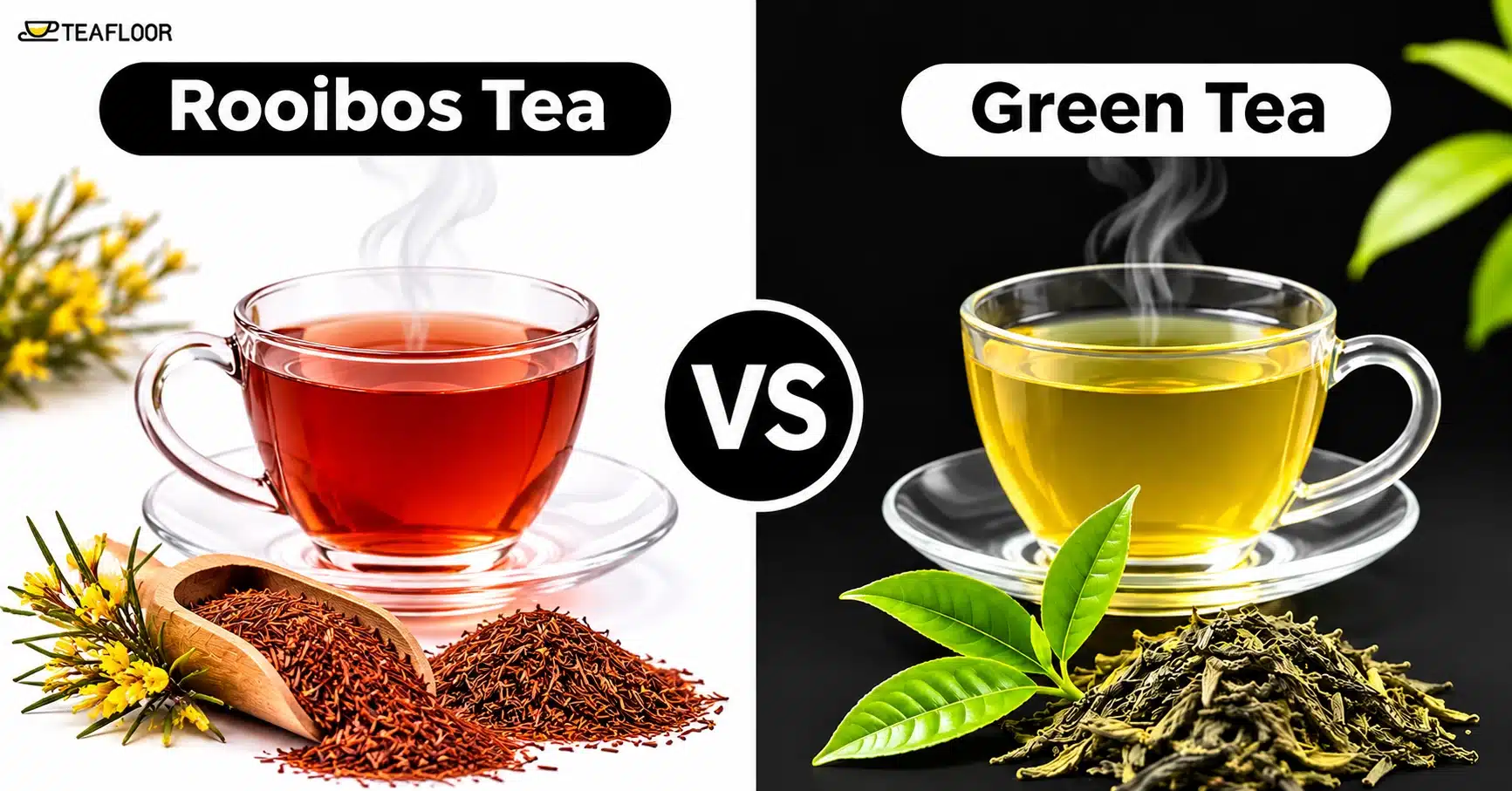
When comparing rooibos tea vs green tea, the choice comes down to caffeine and taste: go for rooibos if you want a naturally sweet, caffeine-free drink any time of day, or pick green tea for a fresh, grassy cup with a mild caffeine kick and metabolism-boosting antioxidants.
Both are healthy, calorie-free drinks, yet they come from different parts of the world and taste nothing alike. Here is a simple, honest breakdown to help you decide which one belongs in your cup.
Rooibos vs Green Tea: Quick Comparison
| Feature | Rooibos Tea | Green Tea |
|---|---|---|
| Where it’s from | South Africa | China, India, Japan & beyond |
| Plant | Aspalathus linearis (Herbal tea) | Camellia sinensis (True tea) |
| Caffeine | 0 mg (Caffeine-free) | 28–45 mg per cup |
| Tannins | Very low (Never gets bitter) | Moderate (Can taste bitter) |
| Main Antioxidants | Aspalathin, quercetin | Catechins (EGCG) |
| Taste | Smooth, naturally sweet, nutty | Fresh, grassy, slightly bitter |
| Water Temp | Boiling water (100°C) | Hot, not boiling (75°C–80°C) |
| Best Time to Drink | Afternoon, evening, or bedtime | Morning or early afternoon |
What Is Rooibos Tea?
Rooibos (pronounced “roy-boss”), also called red bush tea, is a caffeine-free herbal drink made from the leaves of a South African plant, Aspalathus linearis.
After the leaves are picked and dried, they turn a deep reddish-brown colour. In your cup, rooibos tastes smooth, earthy, and naturally sweet with a hint of nuttiness—so you don’t really need to add sugar. (Want to learn more? Read our detailed guide on the health benefits of rooibos tea and its nutrition.)
What Is Green Tea?
Green tea is made from the leaves of the Camellia sinensis plant—the same plant used for black and oolong teas. The leaves are lightly steamed or pan-fired right after picking so they stay green. This keeps the taste fresh and grassy while locking in natural antioxidants.
Key Differences: Rooibos Tea vs Green Tea
1. Caffeine and Energy
- Rooibos has zero caffeine. You can drink it late at night, give it to kids, or enjoy it during pregnancy without worrying about sleep or jitters.
- Green tea has about 28 to 45 mg of caffeine per cup (roughly one-third of a cup of coffee). It also has L-theanine, a natural amino acid that keeps you calm and focused instead of making you feel restless.
2. Antioxidants
Both drinks are good for you, just in different ways:
- Green tea is packed with catechins, especially EGCG, which supports heart health and helps your body burn energy efficiently.
- Rooibos doesn’t have EGCG, but it is the only natural source of aspalathin, along with quercetin. Studies show these antioxidants help protect cells and support healthy blood sugar levels.
3. Tannins and Iron Absorption
Tannins are what give strong tea that dry, slightly bitter taste. They can also stop your body from absorbing iron from plant-based foods.
- Rooibos is very low in tannins, so it is easy on the stomach and won’t block iron absorption if you drink it with meals.
- Green tea has moderate tannins. If you have low iron or anaemia, it’s best to drink green tea between meals instead of right after eating.
4. Taste and Adding Milk
- Rooibos is rich, smooth, and naturally sweet. It tastes great plain, iced, or with a splash of milk, honey, or cinnamon.
- Green tea is light and grassy. Most people drink it plain or with a squeeze of lemon, as milk can hide its fresh flavour.
5. How to Brew Them (Don’t Make This Mistake!)
Brewing both teas the same way is the #1 reason people end up with a bad cup:
- Rooibos: Use boiling water (100°C) and steep for 5 to 7 minutes. Even if you leave the leaves in longer, it won’t turn bitter.
- Green Tea: Let boiled water cool for 2–3 minutes (75°C–80°C) and steep for 2 to 3 minutes. Boiling water burns green tea leaves and makes the cup taste harsh and bitter. (Check out our simple guide on How to Brew Green Tea Without Bitterness for exact tips.)
Which One Should You Pick for Your Goals?
- For Better Sleep: Rooibos. Zero caffeine makes it a great bedtime drink.
- For Weight Loss: Green Tea. The mix of mild caffeine and EGCG gives your metabolism a gentle push when paired with a healthy diet.
- For a Sensitive Stomach or Low Iron: Rooibos. Low tannins mean no bitterness and no interference with iron absorption.
- For Morning Focus: Green Tea. Gives you a clean, steady lift without the coffee crash.
Watch Out: “Green Rooibos” Is Not Green Tea
You might see something called Green Rooibos in tea shops. Even though it has “green” in the name, it is not green tea.
It comes from the same South African rooibos plant, just dried without letting the leaves turn red. It tastes a bit lighter and grassier than red rooibos, has even more antioxidants, and is still 100% caffeine-free.
Any Side Effects?
- Green Tea: Drinking too much (more than 4–5 cups a day) on an empty stomach can cause acidity or nausea because of the caffeine and tannins.
- Rooibos: Very safe for most people. In rare cases, drinking huge amounts daily might affect liver enzymes or hormones, so check with your doctor if you have liver issues or hormone-sensitive conditions.
The Bottom Line
You don’t really have to pick just one—keeping both in your kitchen covers the whole day:
- Drink green tea in the morning or afternoon when you want a fresh taste and a gentle energy boost.
- Drink rooibos in the evening or before bed when you want something warm, sweet, and caffeine-free.
Want to try both? Browse our fresh Natural Green Teas for your mornings, or check out our Caffeine-Free Herbal Infusions at Teafloor. for relaxing evenings.
You May Also Like to Read:
- Curious how another tart red herbal tea compares with green tea? Check out our simple guide on Hibiscus Tea vs Green Tea.
- Want a warm Ayurvedic blend for immunity and daily stress? Read the top Health Benefits of Tulsi Ginger Green Tea.
- Found an old pack of loose leaves in your kitchen? Learn how to check freshness in our guide on Does Tea Expire.
- Looking to support daily wellness and hormonal balance naturally? Explore our complete guide on tea for women health.







Comments (0)