


One is a striking electric-blue infusion that changes colour, the other is a classic grassy green brew. In the butterfly pea tea vs green tea comparison, the differences go far beyond looks – they differ in caffeine, antioxidants and flavour. Here’s everything you need to know to choose between them.
Quick Verdict: Butterfly Pea Tea vs Green Tea
Choose Butterfly Pea Tea if you want a 100% caffeine-free, calming evening drink rich in anthocyanins for skin and eye health. Choose Green Tea if you want a mild caffeine boost (25–45 mg per cup) and EGCG antioxidants for daytime focus and metabolism.
What Is Butterfly Pea Tea?
Butterfly pea tea, often called “blue tea,” is a caffeine-free herbal infusion made from the dried flowers of the Clitoria ternatea plant. Its most famous feature is its vivid blue colour, which turns purple or pink when you add something acidic like lemon.
It has a mild, earthy, slightly woody taste. Native to Southeast Asia, this flower has been used in Ayurveda for centuries, and its vibrant blue hue comes from natural plant pigments called ternatins.
What Is Green Tea?
Green tea is a true tea from the Camellia sinensis plant. The leaves are minimally oxidised, keeping a light colour and a fresh, grassy flavour. Green tea naturally contains caffeine and is rich in catechin antioxidants, especially EGCG.
It also contains L-theanine, an amino acid that works with caffeine to give you steady, calm alertness without the jitters of coffee.
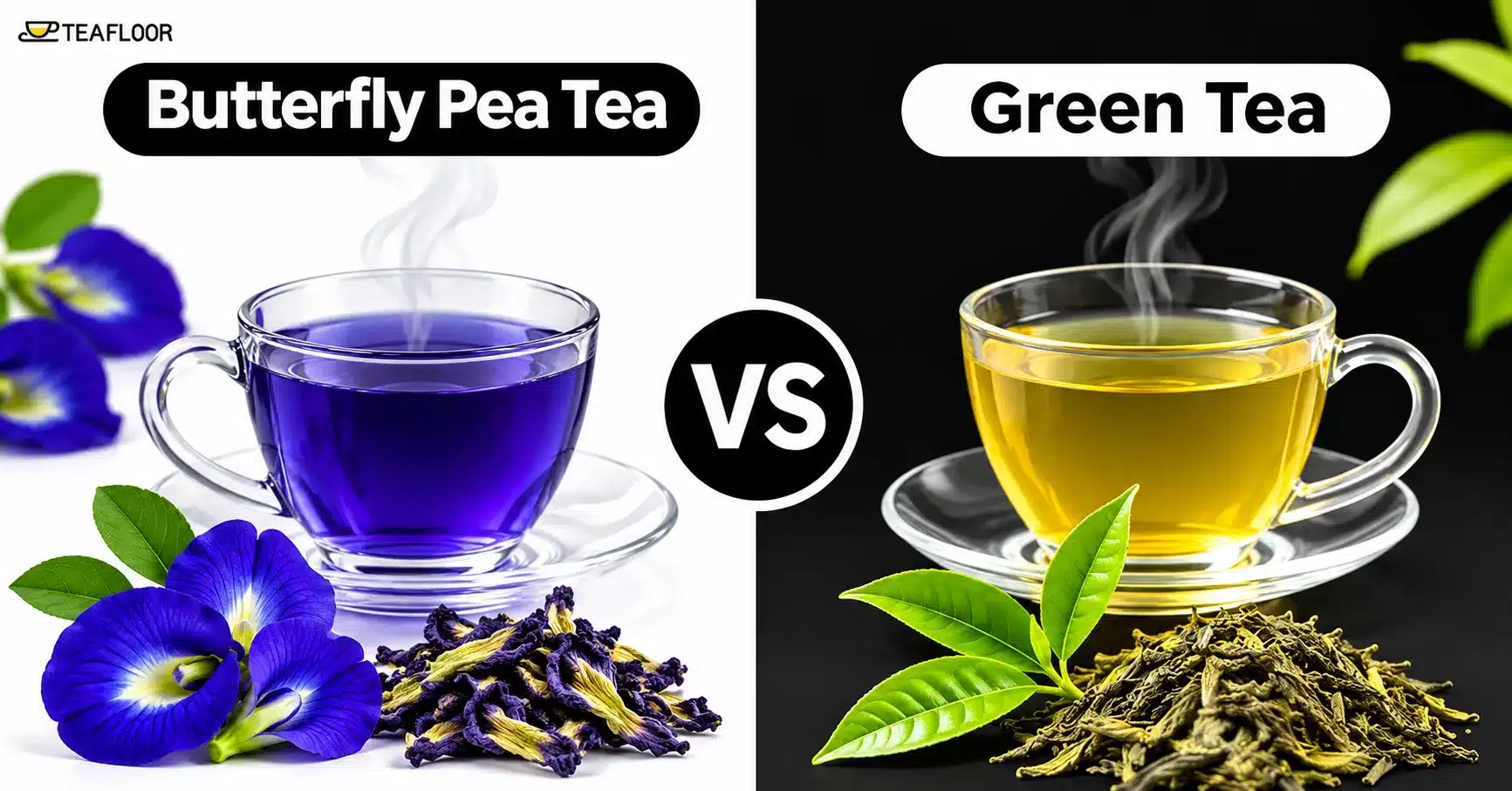
Butterfly Pea Tea vs Green Tea: Comparison Table
Choosing between butterfly pea tea and green tea comes down to their differences in caffeine, taste, antioxidants, and brewing basics.
| Feature | Butterfly Pea Tea | Green Tea |
|---|---|---|
| Type | Herbal infusion (tisane) | True tea (Camellia sinensis) |
| Colour | Bright blue (changes with acid) | Pale green/yellow |
| Caffeine | 0 mg (Caffeine-free) | 25–45 mg per cup |
| Taste | Mild, earthy, woody | Fresh, grassy, slightly bitter |
| Key Antioxidants | Anthocyanins (flavonoids) | Catechins (EGCG) |
| Brewing Temperature | 100°C (Boiling water) | 75°C–80°C (Hot, not boiling) |
| Steeping Time | 5–7 minutes | 2–3 minutes |
| Calories | 0–2 kcal (unsweetened) | 0–2 kcal (unsweetened) |
| Best Use | Colourful drinks, evenings | Daytime energy boost |
Health Benefits Compared
Medical Disclaimer: Both butterfly pea tea and green tea are healthy, low-calorie beverages rather than medicines. Enjoy them as part of a balanced diet, and consult a healthcare professional for any specific medical conditions or concerns.
Butterfly pea tea gets its blue colour from anthocyanins, the same family of antioxidants found in blueberries. It is caffeine-free and is popular as a soothing, antioxidant-rich drink that’s easy on the system at any time of day.
Green tea delivers catechins like EGCG, widely studied for antioxidant activity, plus a gentle caffeine and L-theanine combination that can support calm alertness.
Deep Health Comparison
- Weight Loss & Metabolism: Green tea has an edge here because EGCG and caffeine work together to boost fat oxidation. Butterfly pea tea does not directly burn fat, but it acts as a great zero-calorie swap for sugary drinks.
- Skin & Hair Health: The anthocyanins in butterfly pea tea help support collagen production and fight oxidative stress, making it popular for skin elasticity and hair care.
- Focus vs. Relaxation: Drink green tea when you need mental clarity at work, and switch to butterfly pea tea at night to unwind without disturbing your sleep.
Want to explore all the wellness perks of blue tea in detail? Check out our complete guide on the health benefits of butterfly pea flower tea.
How to Brew Each Tea Properly
Brewing temperature makes a huge difference in taste and antioxidant extraction:
- How to Brew Butterfly Pea Tea: Add 5–6 whole dried flowers to a cup of boiling water (100°C). Steep for 5–7 minutes until the water turns deep blue. Strain and add a squeeze of lemon if you want it purple.
- How to Brew Green Tea: Bring water to a boil, then let it cool for 2 minutes (to around 80°C). Pour over green tea leaves and steep for just 2–3 minutes. Boiling water or over-steeping will make green tea taste bitter.
The Colour-Changing Magic
Butterfly pea tea’s biggest novelty is its colour. The naturally blue brew shifts to purple or pink when you add lemon, lime or other acidic ingredients. This happens because acidic ingredients lower the pH level of the tea, causing the anthocyanin molecules to change structure and reflect different wavelengths of light. This makes it a favourite for mocktails, lattes and Instagram-worthy drinks – something green tea simply can’t do.
Caffeine and When to Drink Each
Butterfly pea tea is caffeine-free, so it suits the evening and anyone avoiding stimulants. Green tea contains caffeine, making it a better daytime drink for a light energy lift. If you love the look of blue tea but want energy, you can even blend the two.
Potential Side Effects & Precautions
- Butterfly Pea Tea: Generally safe in moderation, though pregnant or breastfeeding women should avoid it due to traditional concerns over uterine stimulation. Stop drinking it at least two weeks before any scheduled surgery.
- Green Tea: Avoid drinking green tea on an empty stomach, as its tannins can cause acidity or nausea. Also avoid having it immediately after meals, as it can reduce iron absorption from food.
Which One Should You Choose?
Pick butterfly pea tea for a caffeine-free, antioxidant-rich, colour-changing drink that’s fun and calming. Pick green tea for a classic, lightly caffeinated cup with catechins for daytime focus. Both are great – the right choice depends on caffeine needs and whether you want that signature blue hue.
Explore vibrant blue butterfly pea tea and fresh green teas at Teafloor.com.
You May Also Like to Read:
- Curious how another vibrant floral infusion stacks up against green tea? Check out our detailed comparison on Hibiscus Tea vs Green Tea.
- Looking for an Ayurvedic twist to boost your daily immunity and stress relief? Explore the top Health Benefits of Tulsi Ginger Green Tea.
- Want to know how herbal and green infusions support hormonal balance and daily wellness? Read our complete guide on tea for women health.
- Interested in exploring how harvest seasons change the flavour and aroma of Indian teas? Discover the key differences in First Flush vs Second Flush Darjeeling Tea.






Comments (0)